
What the CHIPS Act Means for Your IT Career
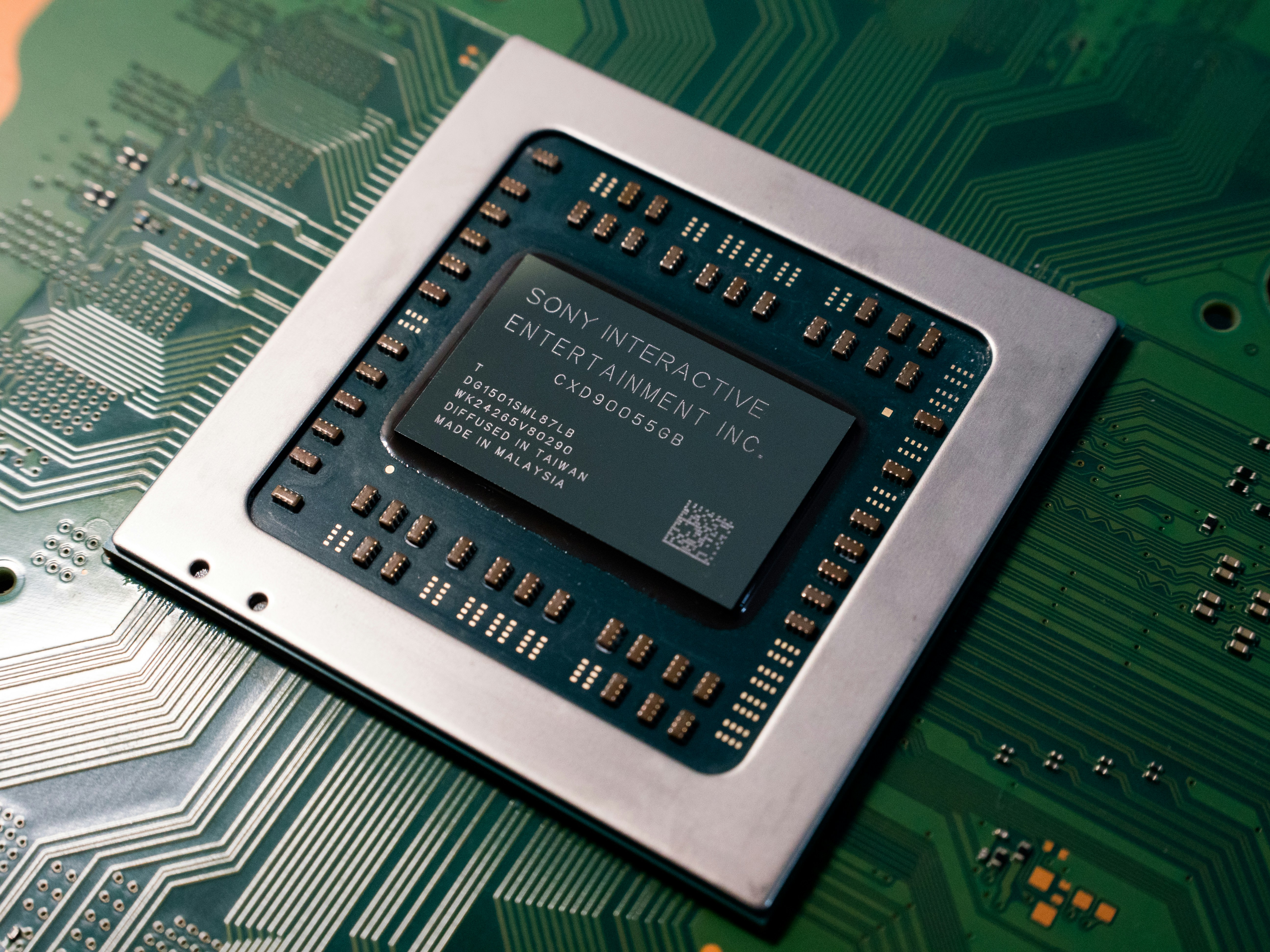
The CHIPS Act Is Coming. Your Career Probably Should Too.
Congress is moving fast on something that doesn’t usually get much attention outside of tech policy circles: the CHIPS and Science Act. The bill, now advancing through both chambers with broad bipartisan support, commits $52 billion to US semiconductor manufacturing and research. If you work in IT, this isn’t just Washington spending money. This is a rewrite of where tech jobs will be, what skills will command premium pay, and which regions will attract serious investment over the next five to ten years.
We’ve just lived through a semiconductor shortage that touched everything from cars to gaming consoles to data center hardware. That shortage had a name: dependence on foreign manufacturing, mostly in Taiwan and South Korea. The CHIPS Act is the federal government’s answer. And it’s going to transform the IT job market in ways you should probably understand right now, because companies are already positioning themselves to capitalize on it.
Where the Money Goes, the Jobs Follow
Intel announced a $20 billion fab in Ohio in January. Taiwan Semiconductor Manufacturing Company (TSMC) is building capacity in Arizona. Samsung is expanding in Texas. These aren’t theoretical announcements; they’re construction projects underway. And they’re just the beginning. The $52 billion in federal investment is designed to pull private capital along with it. Every dollar of government money will trigger multiple dollars in private manufacturing investment.
When a company builds a new fabrication plant, they’re not just hiring process engineers and manufacturing technicians. They’re building entire IT infrastructure ecosystems. Data centers for factory operations, security systems, supply chain management, quality control databases, environmental monitoring, and production scheduling systems. That’s IT work. And it’s not work that can be offshored or simplified into a spreadsheet.
Consider what a modern fab actually requires. We’re talking about clean rooms with precision environmental controls, robotics with networked diagnostics, supply chain systems that track materials down to the micron level, and security networks that protect intellectual property from foreign governments and competitors. The IT complexity rivals what you’d find in a Fortune 100 company. Except you’ll find these data centers in places like Ohio, Arizona, and Texas, not Silicon Valley or the Northeast corridor where most tech jobs currently cluster.
The Skills You Should Be Watching
Industrial IT is about to become a serious career track. The semiconductor industry calls it OT/IT convergence: operational technology (the machinery and sensors that actually make things) merged with information technology (the systems that monitor and control everything). If you’ve spent your career in traditional IT, managing networks and helping users with spreadsheets, this is different. You’re managing systems where software bugs don’t just slow down a report. They can ruin a $2 million batch of wafers mid-production.
Supply chain security is another skill set that just got a federal mandate. The government funded this entire enterprise partly because semiconductor supply chains became a national security issue. That means companies building these fabs are going to take supply chain IT seriously in ways they never have before. Threat modeling. Supplier vetting. Secure data exchange with external partners. Network segmentation between your fab floor and your supply network. These aren’t abstract cybersecurity concepts anymore; they’re the foundation of the business.
Data center operations and infrastructure engineering are obvious too. Each fab needs serious computing power, redundant systems, disaster recovery, and the ability to scale without interruption. Network architecture for these facilities is complex and specialized. If you know data center operations, power distribution, cooling systems, and infrastructure automation, you’re looking at a career field that’s about to expand dramatically in regions that have never been major tech hubs.
Manufacturing IT more broadly will see increased hiring. Production scheduling systems, quality control databases, enterprise resource planning systems, maintenance management platforms. This is bread-and-butter IT work, but it’s going to be in high demand, and it pays better in manufacturing environments than in many traditional corporate settings.
Geography Will Matter Again
For most of the last two decades, IT workers have had the luxury of location independence. You could work in Nebraska just as easily as in San Francisco if your employer allowed it. The CHIPS Act changes the calculus because fabs can’t be remote. You have to be physically present to manage the infrastructure.
This means Texas, Arizona, and Ohio are about to become serious tech hubs, not as a supplement to existing tech centers but as genuine alternatives. Companies won’t be able to staff these new facilities entirely with talent relocated from coastal tech centers. There aren’t enough people, and the cost structure doesn’t work. They’ll need to build technical talent pipelines in the regions where they’re building plants. That means community colleges in those states will start offering semiconductor manufacturing IT programs. It means local employers will start competing aggressively for IT talent. It means salaries in those regions will rise toward coastal rates out of necessity.
If you’re currently in a lower cost-of-living region and you want to stay there, your bargaining position just improved. Employers will need distributed teams because they literally can’t hire everyone locally.
How This Connects to Your Career Planning Right Now
When you’re thinking about where to invest your time learning new skills, this is the thing to watch. Government investment in infrastructure creates stable, long-term demand for specific skill sets. That’s different from following whatever technology trend is loudest on social media. Federal investment creates contracts and long-term plans. Companies betting on CHIPS Act funding aren’t going to lay off their IT staff when the next market downturn happens.
If you’ve been thinking about transitioning into industrial or manufacturing IT, the next 18 months is probably the best window to do it. As we discussed in our piece about how federal spending shapes IT career planning, government investment creates hiring pipelines that last years. You want to be positioned early, not five years from now when every tech worker with a manufacturing background has already snapped up the available roles.
The stability and security angle matters here too. Federal contracts require security standards, audits, compliance documentation, and ongoing monitoring. That might sound like bureaucratic overhead, and in some ways it is. But it also means your employer is taking security seriously by default, not as an afterthought during a breach. It means job security because the work can’t be cut on a whim. And it means you’re building skills in an environment where security isn’t traded away for speed or cost savings.
Your geographic options matter as well. If you’ve been considering a move or a career transition, understanding where this $52 billion is flowing helps you make better decisions. The fabs aren’t going to Arizona, Texas, and Ohio for random reasons. They’re going there because of tax incentives, land costs, and labor availability. Those regions are about to see real investment. Not vaporware. Not one company’s optimistic forecast. Actual federal dollars tied to actual construction.
The Contractor Track
There’s also a contractor and government IT angle here worth mentioning. If you’ve ever considered federal contractor IT roles, CHIPS Act implementation is going to create sustained demand. The Departments of Commerce and Defense are deeply involved in managing this investment, overseeing contracts, and ensuring security requirements are met. As we covered in our article on federal and contractor career paths, government IT roles offer stability and benefits that private sector work sometimes doesn’t. The CHIPS Act expansion means those roles will be actively hiring.
What You Actually Do Next
Start by understanding what your skills are worth in a CHIPS-era job market. If you’re strong in infrastructure, manufacturing IT, supply chain security, or data center operations, you’re looking at a field that’s about to get much more competitive for talent and much more valuable as a result. That’s not a reason to assume salaries will automatically rise for everyone, but it does mean you have real bargaining power.
If you’re not currently in one of those specialties, think about whether you want to be. The learning curve isn’t as steep as it sounds. Most IT skills transfer across industries. The difference is gaining familiarity with the specific operational and security requirements of semiconductor manufacturing. That’s mostly reading, watching, and finding ways to work on problems in that domain. Community colleges and online courses in industrial IT and OT/IT convergence are starting to show up. So are training programs offered by companies hoping to build their talent pipelines in these new manufacturing regions.
The next few years will be noisy. You’ll hear a lot of hype about reshoring, manufacturing renaissance, and geopolitical supply chain strategies. Some of that will be real, and some of it will be marketing. But the underlying trend is solid. Congress is committing serious money to this. Companies have already announced plants. The IT infrastructure to support these operations doesn’t build itself. Your career can be positioned to benefit, but you need to start thinking about it now, not after the job postings start appearing.
The CHIPS Act isn’t just economic policy. It’s career strategy. And it’s happening faster than you probably realize.