What the Great Resignation Taught Us About Planning for 2022

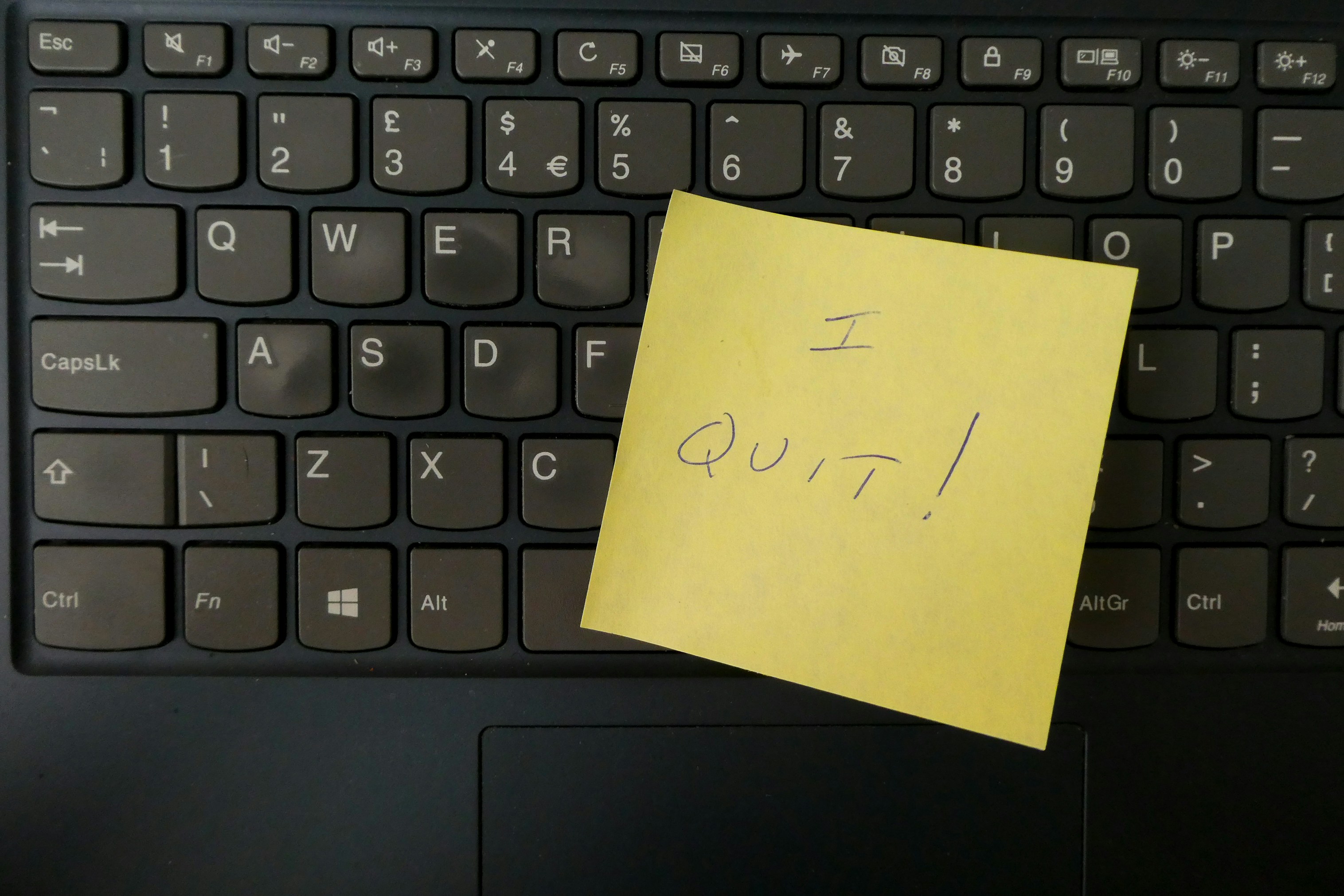
It’s hard to summarize 2021 in a single phrase, but “the Great Resignation” comes closer than most. We watched a tidal shift in how IT professionals think about their work, their employers, and their futures. Whether you rode that wave or watched from the sidelines, understanding what happened this year will directly shape how you approach 2022.
The numbers tell the story. In August, 4.3 million Americans quit their jobs. In September, that grew to 4.4 million, the highest single month recorded since the Bureau of Labor Statistics started tracking quits in 2000. IT was among the hardest-hit sectors, with cybersecurity professionals and cloud engineers particularly poised to make moves. This wasn’t random churn. This was people making calculated decisions about where they wanted to spend their time and energy.
Why People Left
The reasons behind the Great Resignation are complicated, but they cluster around a few themes. Burnout and mental health took a serious toll throughout 2021. A survey from the Enterprise Strategy Group and the Information Systems Security Association found that 51% of cybersecurity professionals reported extreme stress or burnout, and 65% seriously considered leaving. SOC professionals were drowning in alert fatigue, receiving over 10,000 alerts per day, and the skill shortage meant understaffed teams had to do more with less. That’s a recipe for exhaustion.
Money matters too, but it’s not the whole story. Salaries for IT professionals rose, but they didn’t keep pace with inflation. The median compensation for IT pros at large enterprises hit $100,022 in 2021, a rise of about 2.05% year over year. Meanwhile, inflation was running at 8%, which means if you didn’t get raises, you effectively lost purchasing power. That gap didn’t go unnoticed.
What really empowered people to quit, though, was the tight labor market. Job openings in the information sector doubled from 109,000 at the end of 2020 to 217,000 in December 2021. There were 0.6 unemployed people for every job opening, the lowest ratio in the history of the survey. If you were an IT professional in late 2021, you could walk out on Friday and have three interviews lined up by Monday morning. Employers knew it. Workers knew it. That power dynamic shifted the entire conversation about compensation, flexibility, and what you’re willing to tolerate.
The Cybersecurity Year
2021 was the year cybersecurity stopped being a footnote in IT strategy and became the main story. The industry had already been under pressure after the SolarWinds supply chain attack of 2020, but 2021 compounded the crisis.
In March, the ProxyLogon vulnerabilities in Microsoft Exchange hit hard. Over 30,000 organizations were compromised within weeks of disclosure. Microsoft’s security team disclosed critical zero-day exploits, and threat actors moved faster than most organizations could patch. The industry learned, again, that vulnerabilities this severe demand immediate attention and cannot wait for convenient maintenance windows.
May brought the Colonial Pipeline ransomware attack, which drove home the fact that cybersecurity isn’t abstract anymore. Gas shortages rippled across the East Coast. Hospitals diverted patients. Airlines had to reroute flights. Colonial Pipeline paid $4.4 million in ransom. The incident crystallized a simple truth: if critical infrastructure can be held hostage, so can anyone.
Then came Kaseya. In July, REvil threat actors used a supply chain weakness in Kaseya, a remote monitoring tool used by hundreds of managed service providers, to deploy ransomware to between 800 and 1,500 small and medium-sized businesses. The gang demanded $70 million in ransom. What made this attack particularly chilling was how easily the attack scaled. A vulnerability in one tool compromised an entire ecosystem of dependent companies.
These three incidents, plus ongoing pressure from the aftermath of SolarWinds, created a crisis mentality across IT security teams. Budgets that had been constrained for years suddenly became priorities. Security was no longer a box to check. It was the lens through which everything was being evaluated.
Remote Work: The Experiment Ends
2020 forced most of us to work from home, and we learned a lot in that first year about what IT work actually requires. 2021 was supposed to decide whether remote work would stick. It became complicated.
Early in 2021, every major tech company announced that remote work would be an option going forward. Some companies like Salesforce and others made bold statements about a distributed workforce. The assumption was that flexibility had won, that the pandemic had permanently shifted how and where we worked.
What 2021 actually showed us was that many companies were trying to have it both ways. Apple delayed its return-to-office mandate twice, facing intense pushback from employees who had spent over a year working effectively from home. By December, KPMG quietly tightened its policy from two days a week in the office to four. Salesforce began calling workers back to offices starting January 2022. The temporary had started to feel permanent from the company side, but flexibility had started to feel permanent from the worker side. That collision course seems inevitable.
What’s clear heading into 2022 is that the question isn’t “will remote work survive?” The question is which hybrid model will stick, and for which companies. Some businesses will double down on in-office culture. Others will genuinely embrace distributed teams. Most will land somewhere in the middle and spend the next two years arguing about it.
The lesson for you: if remote flexibility was a major draw when you consider a move, get it in writing now. Companies are starting to reverse policies, and you want clarity before you accept an offer.
Skills That Mattered in 2021
If you were looking to increase your market value this year, you focused on cloud and cybersecurity. Cloud computing continued its relentless expansion throughout 2021. Every segment grew: SaaS, PaaS, IaaS. Organizations needed people who could architect systems for cloud deployment, not just maintain servers in racks. DevSecOps, which integrates security directly into the development lifecycle, commanded premium pay, with teams offering salaries 19% higher than base salary as bonus compensation.
Application security and cloud security were the fastest-growing cybersecurity skill areas, with projected five-year growth rates of 164% and 115% respectively. Organizations couldn’t build fast enough, and they couldn’t do it without thinking about security from day one. Data scientists and data engineers remained in high demand as the flood of IoT data and big data convergence created problems that required data expertise to solve.
What didn’t get as much attention, but probably should have, is the skills gap. Ninety-five percent of cybersecurity professionals surveyed said the skills shortage and its impacts hadn’t improved over recent years, with 44% saying the situation had actually worsened. This points to a hard truth: the jobs are there. The people to fill them are scarce. That’s a structural problem that can’t be solved overnight.
What to Do About It
If you’re thinking about your career in 2022, here’s what the data suggests.
First, the tight labor market is real and you should take advantage of it if you’re unhappy. You have bargaining power, genuinely, like maybe never before. I wrote in July about why this was the moment to negotiate, and that advice hasn’t expired. That doesn’t mean job-hopping forever creates a sustainable career. But if you’re burned out, underpaid, or working for a company that doesn’t respect you, 2022 is the time to move. The market favors you right now. The instant you move, though, understand that employers will start pushing back. You can feel the inflection point beginning to happen already. Make your move count.
Second, invest in cloud and security skills. These aren’t trendy. These are fundamental to where IT is going. If you’re working in legacy infrastructure, consider how cloud certification or security fundamentals could expand your options. The data shows that people with these skills can command higher compensation and have more choices about where they work.
Third, carefully evaluate your current role. If you’re at a company that’s tightening its remote work policies, do you want to be there? If you’re in a completely overwhelmed security team, is that the year you want to spend there, or should you be looking elsewhere? What we learned in 2021 is that burnout is real and has a cost. It’s not noble to burn yourself out. It’s just leaving money on the table.
Finally, think about what 2022 will actually bring. The tight labor market will probably continue, but it won’t continue forever. Hiring will normalize. Salaries will normalize. The company with a 30% raise offer in 2022 may not have one in 2024. These windows close. Smart planning means positioning yourself now for what you want in three years, not just grabbing the highest offer next month.
We covered a lot of ground in 2021, and we’re all a little more seasoned for it. The Great Resignation taught us that workers have power when the market turns in their favor, and that power matters. Security threats escalated to the point where they’re now a business imperative. Remote work proved viable but also revealed where company cultures actually stand. Your job isn’t to be loyal to a company that doesn’t reciprocate. Your job is to build a career that pays you fairly, respects your time, and lets you do work you think matters.
The labor market in early 2022 will give you options you might not see again this decade. Make them count.